
Fertility in motion
What better month than May to meditate on fecundity?

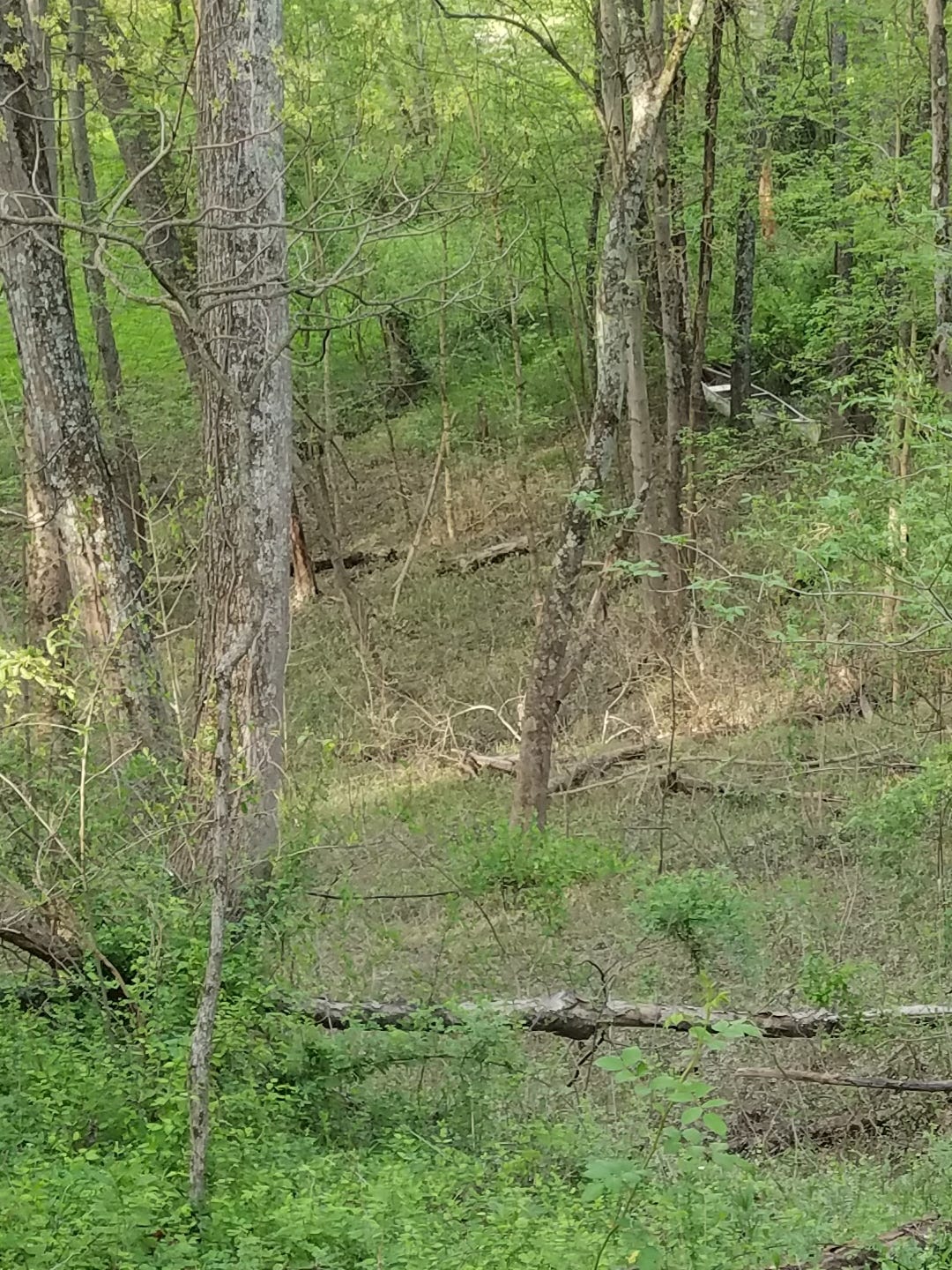
The gully with stranded canoe
Recent floods left a layer of mud in the pastures and halfway up the hillsides that bracket the drainage bisecting the property. The low lying groves of young box elder, sycamore, and pawpaw also received their share. The water picked up logs, sticks, and masses of dead stalks from last year's wildflowers and deposited them along the high water line and randomly across the landscape. Removing the detritus from fields and paths means extra work, and walking safely in low areas can be difficult, but there is a positive aspect to floods that is often unremarked upon these days: Flood waters spread fertility.
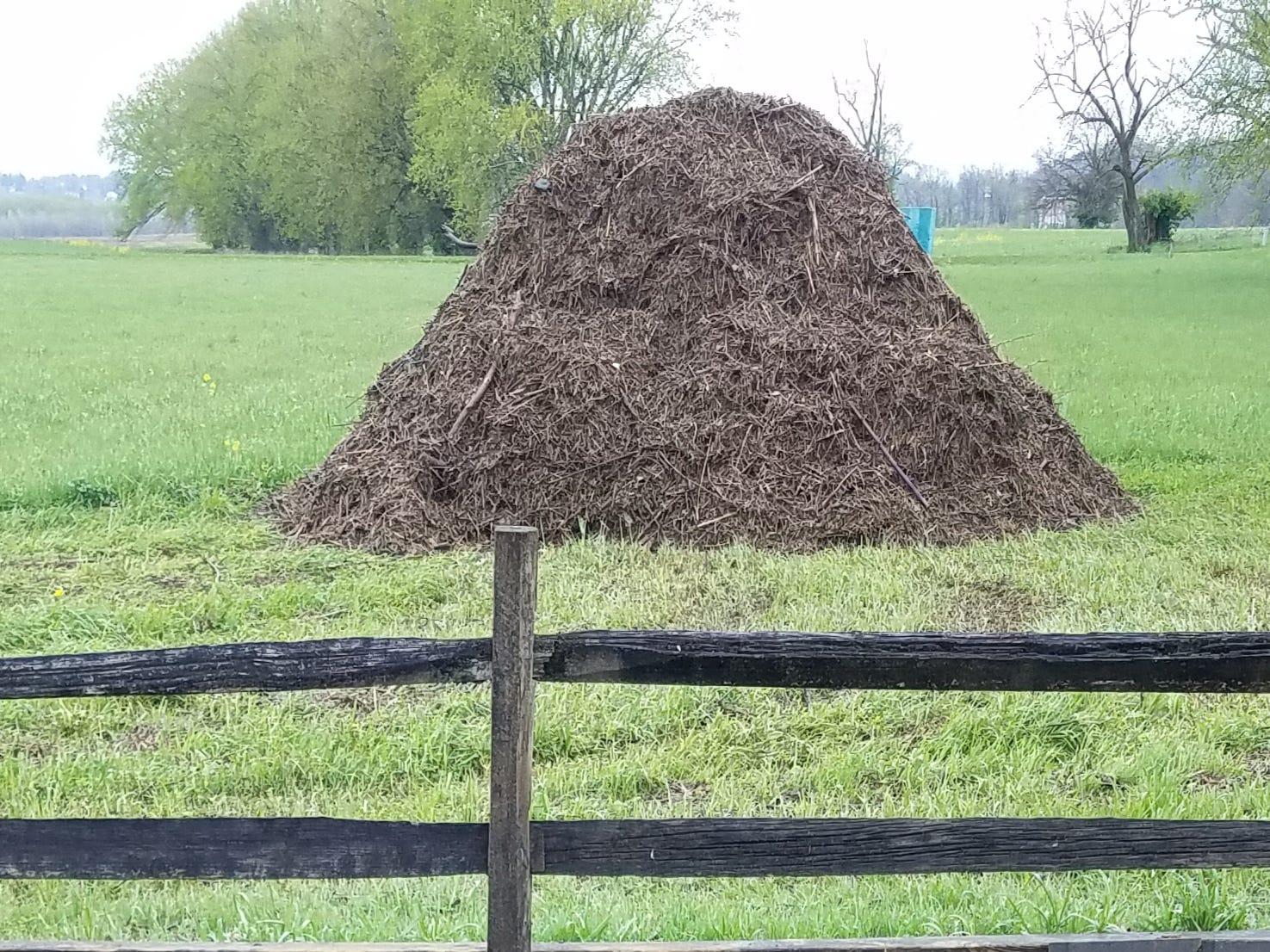
Mass of sticks left by floodwaters, gathered into a stack by an intrepid farmer
What we call mud is actually crucial minerals and organic matter that would otherwise collect on the river bottom and ultimately end up in the ocean. It's not coincidence that large human settlements sprang up in broad valleys. These relatively flat areas are nearly perfect places to grow food due to the flood-enriched soil, and provided hunter/gatherers with bountiful game and foraging opportunities.
Floods are part of the solution to the problem of the inevitable migration of fertility from a high position on land to the ocean. On earth, matter is constantly being cycled in processes encapsulated by the term biogeochemical cycles. Most of us probably learned in school about the water cycle to understand why rain falls, and the rock, or sedimentary cycle, when we studied basic geology. There are also the nitrogen cycle, the carbon cycle, and the phosphorus cycle, among others, each named for the element that is in motion. In order to simplify things, and for the purpose of practical application, I'm going to lump together dissolved minerals and organic matter in various states of decay, and call the movement of such materials the fertility cycle.
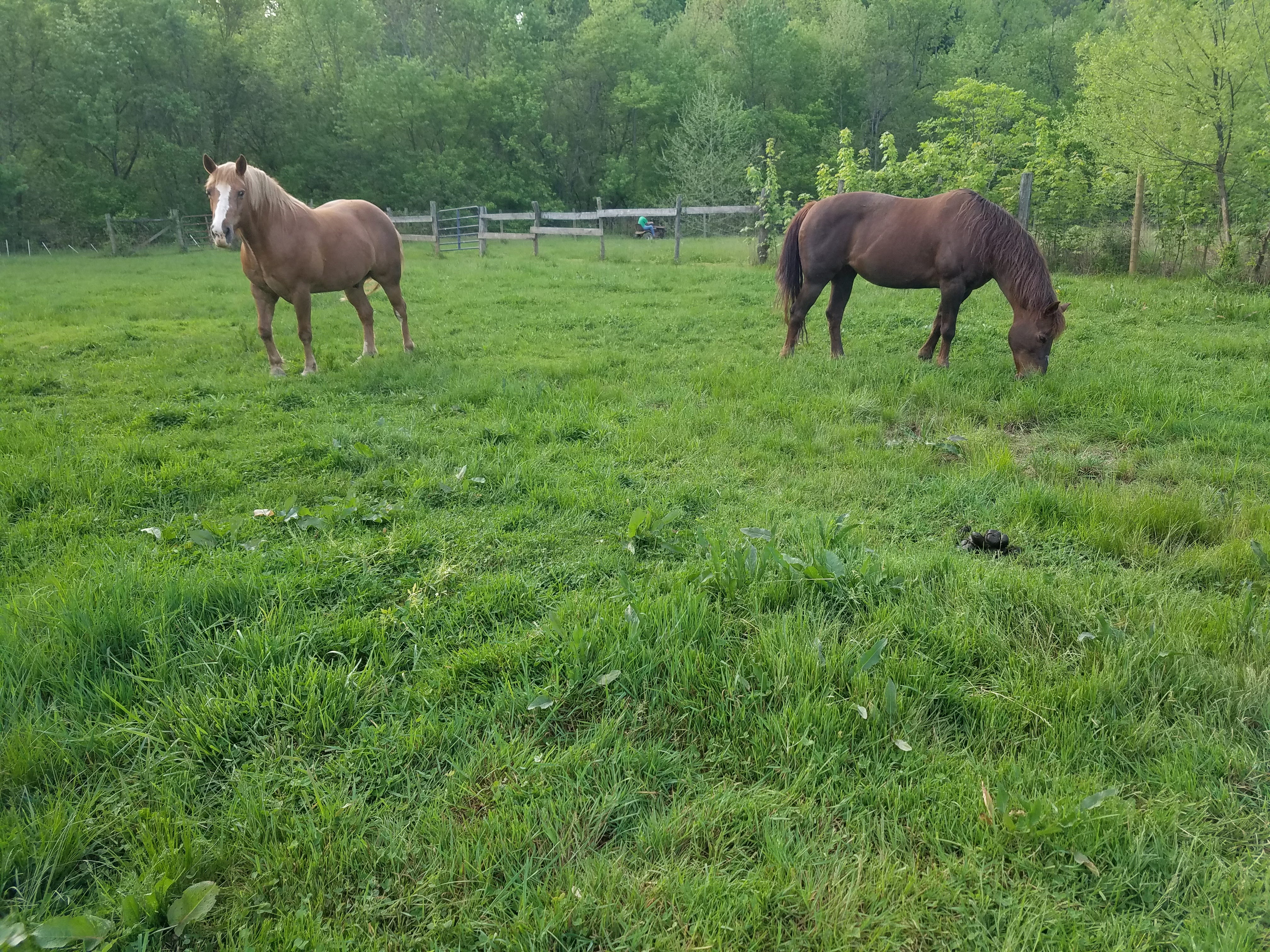
Pastures are becoming rich and lush, not always a good thing for horses
Here on the farm, anything upstream of us that can be dissolved or simply lifted from its place can potentially make its way here. This has included styrofoam coolers, a mounted tire, innumerable plastic bottles, and a 70’s style console television, but also fertility in the form of mud. Though the general direction of movement is from higher to lower, as the water backs up it transports material considerably higher than the river banks, intercepting it in its journey to ocean bottom. Nutrients are conserved and put to use nourishing the living creatures to whom it has been delivered.
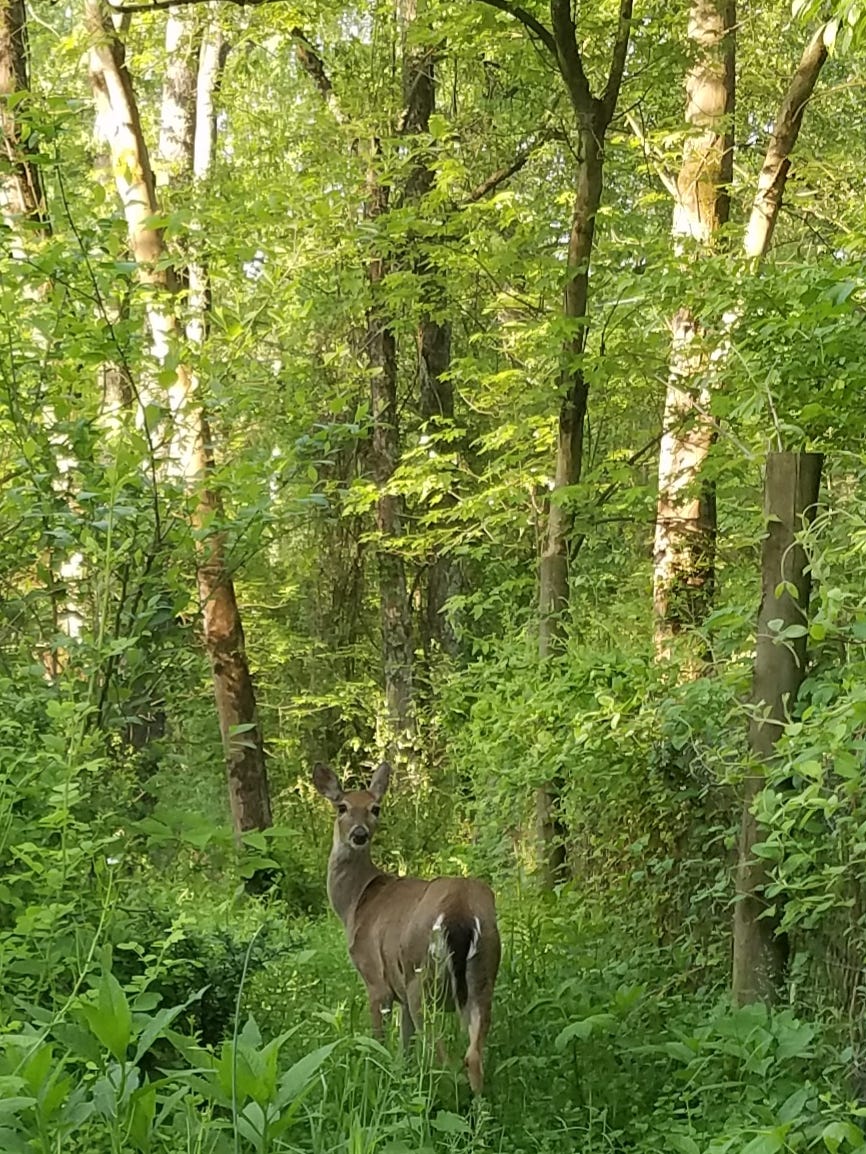
White-tailed deer strikes a pose on my way to work
Think for a moment of all the processes of the earth in motion specifically for the purpose of moving fertility from low to high. Ocean sediments sink over eons, are moved around due to heat and pressure in the mantle, and are raised up as mountain ranges or spewed out of volcanoes, the ash from which can reach the other side of the globe.
What about organic matter? As rivers inevitably move it downstream, some is captured in river valleys, but there are also agents at work that actively reverse the flow, moving fertility from low to high. Salmon in their thousands leave the seas, carrying vast amounts of rich biomass in their bodies far inland. Bears drag many ashore to be consumed, then spread the bounty far and wide with their scat. Eagles carry the fish to their aeries, providing fertility to any creature below quick enough to make use of it on its downward trek.
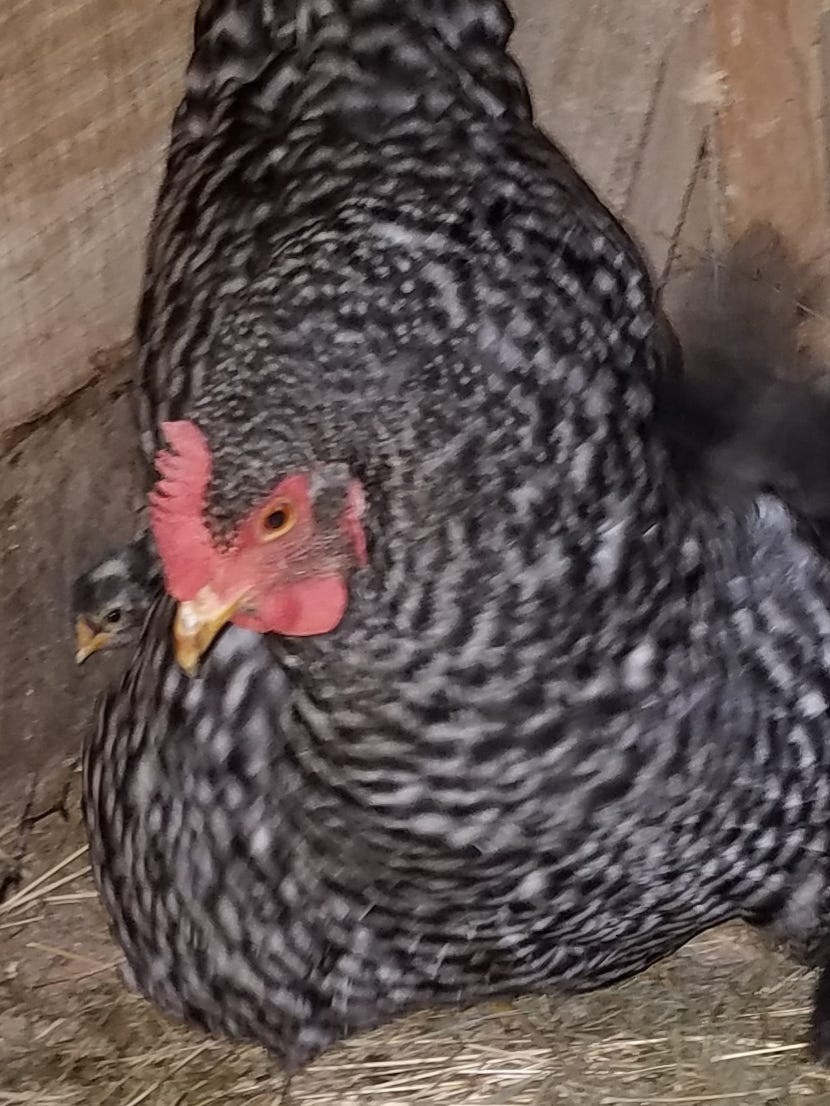
Peekaboo: This barred rock went rogue and now has 13 chicks
While salmon are probably the most famous aquatic migrators in North America, catadromous eels also move prodigious amounts of fertility. They reproduce in the sea, where their spawn take advantage of rich ocean waters to grow and develop, then carry this embedded fertility upstream to their freshwater homes.
The dorado catfish takes the prize for most ambitious transporter of fertility, traveling over 3000 miles from the Amazon delta to spawn in its headwaters near the Andes. Reaching six feet and 200 lbs, these goliath catfish die far upstream, spreading nutrients to myriad creatures from bacteria to humans.
Vast migrations of birds and other creatures move fertility here and there around the globe, sometimes from low to high when winters are spent at lower, warmer altitudes and summers in high mountain meadows. Nomadic humans participate in this process when we rotate grazing livestock between winter and summer pastures.
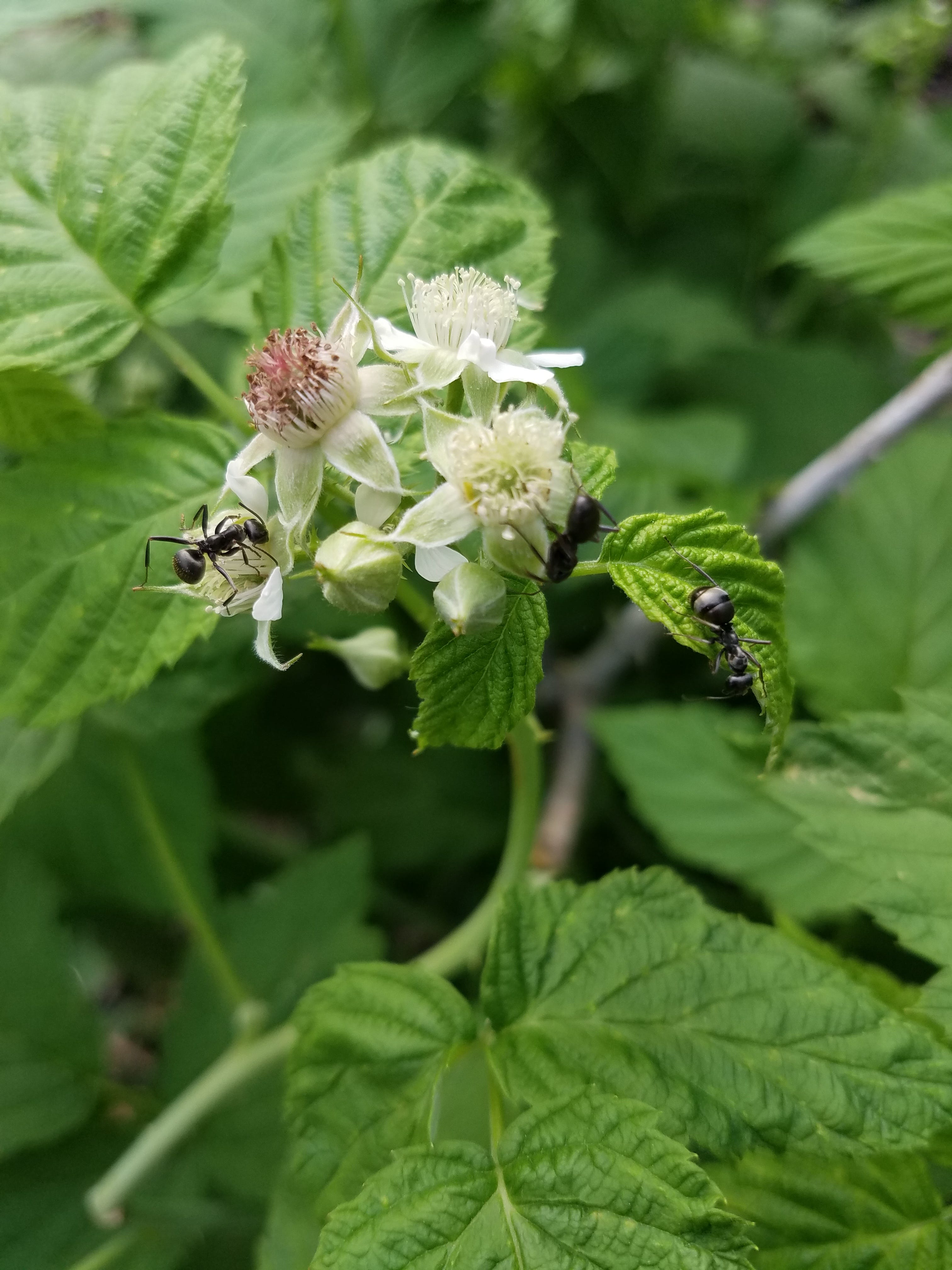
Ants visit black raspberry flowers
Plants, though rarely mobile in the way animals are, spread fertility masterfully. Tall trees drop leaves and seeds that catch the wind and travel upland. They send nutrients through mycelial networks from areas of higher concentrations to where they are needed. As plants and fungi colonize disturbed areas after fires or volcanic eruptions, animals follow, covering bare ground, and moving life inexorably upward.
If we go far back in time, we reach the time when plants and later animals left the seas for life on land. This might be seen as the original push to get life moving uphill. It has been very successful, but now humans have stymied the efforts of nature to spread fertility. With industrial processes we've turned nutrients into a problem rather than a boon for living creatures. Runoff of excess chemical fertilizers has created dead zones at river deltas. Factory farms confine huge numbers of animals in small spaces and funnel rivers of manure into lagoons. Organic waste from cities is sequestered in landfills and sent to sewage treatment plants where much of it ends up as atmospheric methane and carbon dioxide. What we now call “waste” is often just large amounts of concentrated fertility.
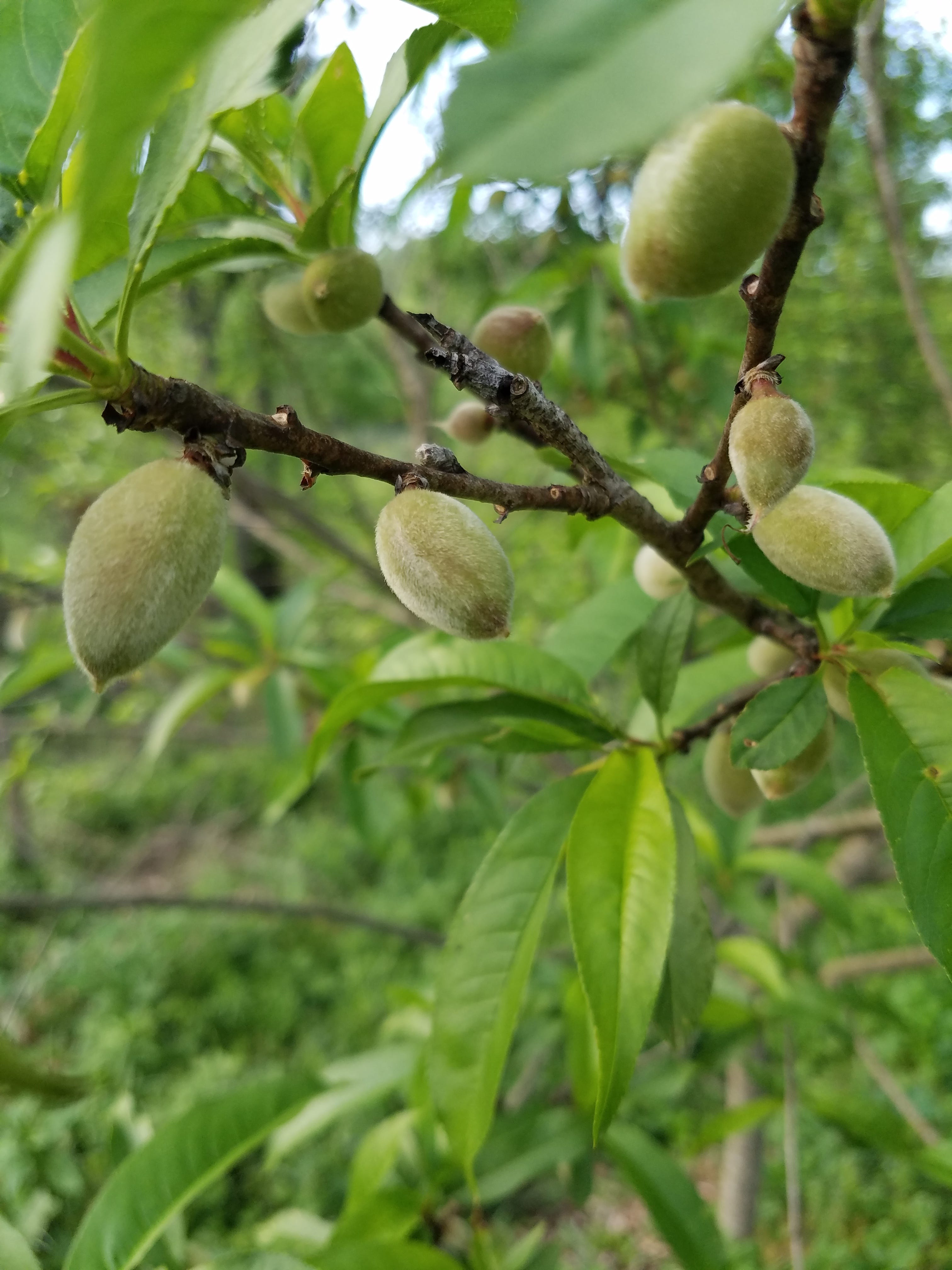
Peaches have appeared as if by magic
This dilemma can't be dealt with by individual efforts. Changing these problematic concentrations of fertility will require a restructuring of the way we grow food and deal with solid waste. However, anyone wishing to conserve fertility, close loops, and save money can observe and attempt to understand natural cycling in order to apply lessons learned to their own property.
Fertility flows into the farm in various ways: Floods bring mud, trips to the grocery store and farmer's market bring food, the fields of local farmers provide hay for the horses, and the drainage ditch delivers incompletely broken-down sewage from upstream neighbors' septic systems. I also receive truckloads of wood chips and logs that have no use to many and are considered worthless. In addition, contributing to fertility on the farm are plants — some fix nitrogen, but most simply turn water, sunlight, and atmospheric carbon into biomass that is stored until the death of the plant, at which time it will be recycled for use by nearby flora and fauna.
Some of this fertility flows out through our septic system, or washes away during heavy rains into the river, or is converted to energy, but much of it is also lost to the air. Ever wonder why your compost pile shrinks to about a tenth of its original size? The carbon that was used as building blocks for plant cells is consumed by bacteria and released as CO2 and methane.
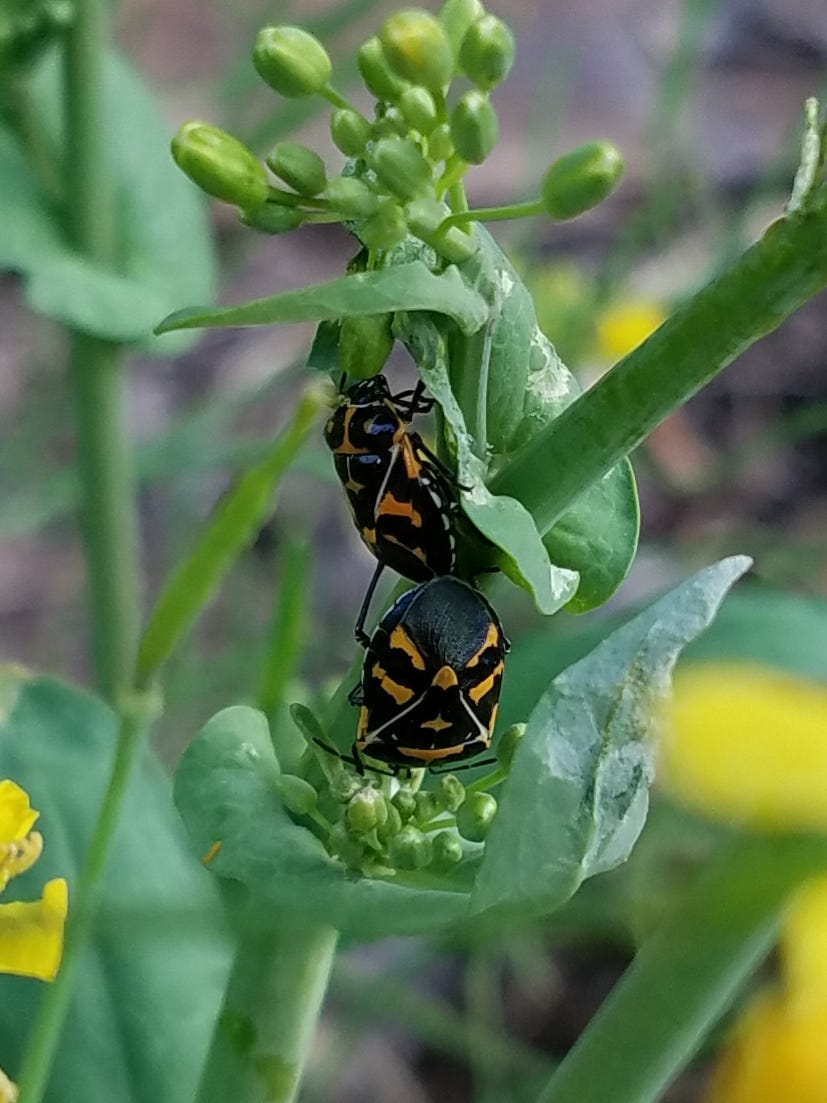
It's the season of eating and mating
This departure of carbon from manure spread on pasture or placed in piles is the inevitable result of organic decay. Anaerobic digesters which capture methane released during breakdown are one way it can be collected and put to use. On the farm I try to reduce loss as much as possible by spreading manure when plants are actively growing and are able to make use of fertility as it becomes available. Spring and fall are therefore good times, and summer is not bad. Winter is acceptable, but much of the good stuff is leached out by winter rains or lost to the atmosphere. My partial solution is to carry buckets of manure for spreading to the highest point of land on the farm during the cold months. The distance to the river from here is the longest, maximizing opportunities for use. There's less work in winter since the garden is dormant, and along with hauling and chopping wood, schlepping poop pails uphill is good, warming exercise.
If you're starting from scratch and have flexibility it placing elements, locating animal housing and compost areas on higher ground is a good idea. Gardens, food forests, wood lots, etc., placed downhill will naturally make use of any runoff with little effort on your part.
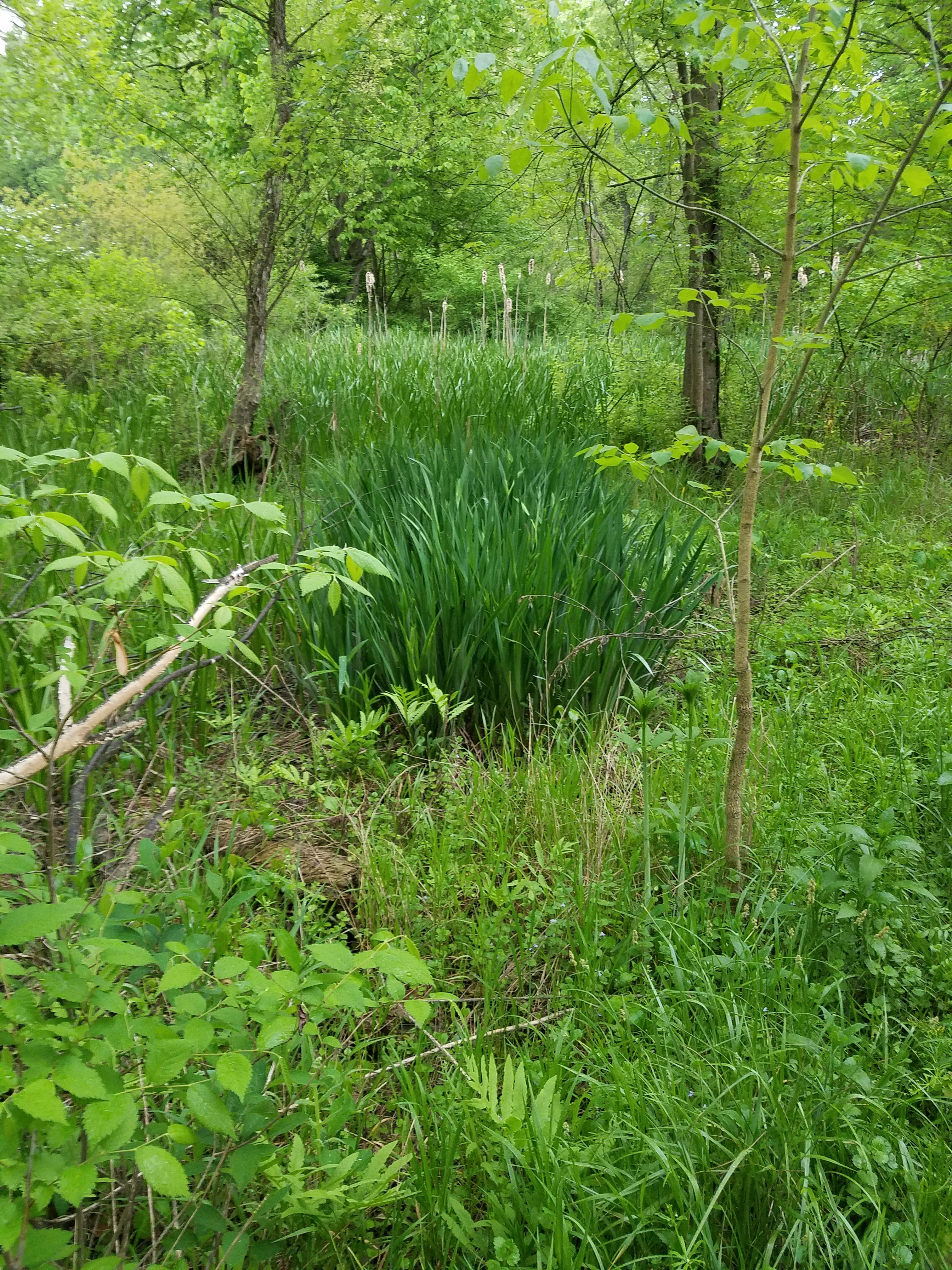
The wetland is no doubt benefiting from human poop
Taking note of paths by which fertility enters and leaves a site is the first step in improving your fertility budget. By stopping the flow of organic matter away from our homes, we can put it to use on site. For many people, an easy first step in minimizing loss is to stop sending organic matter to the landfill and down the drain. The fact that many homeowners still bag up leaves and weeds for trash pick up and use garbage disposals to deal with food waste is dismaying. And while safely making use of solid waste requires quite a commitment, almost anyone can put urine to use without risk. Diluted with water it works well for watering blueberry bushes and many other plants.
Earlier I mentioned less-than-perfect septic systems of uphill neighbors. Luckily the drainage that handles this runoff meanders into the woods and away from the house on its way to the river. Someday the local health authorities may decide the situation needs remedying, but I see more benefit than harm, and I've taken measures to slow and spread the water so dissolved nutrients can be utilized by trees to grow bigger, faster. This mostly means the low tech solution of improvising check dams by throwing sticks and logs into the ditch.
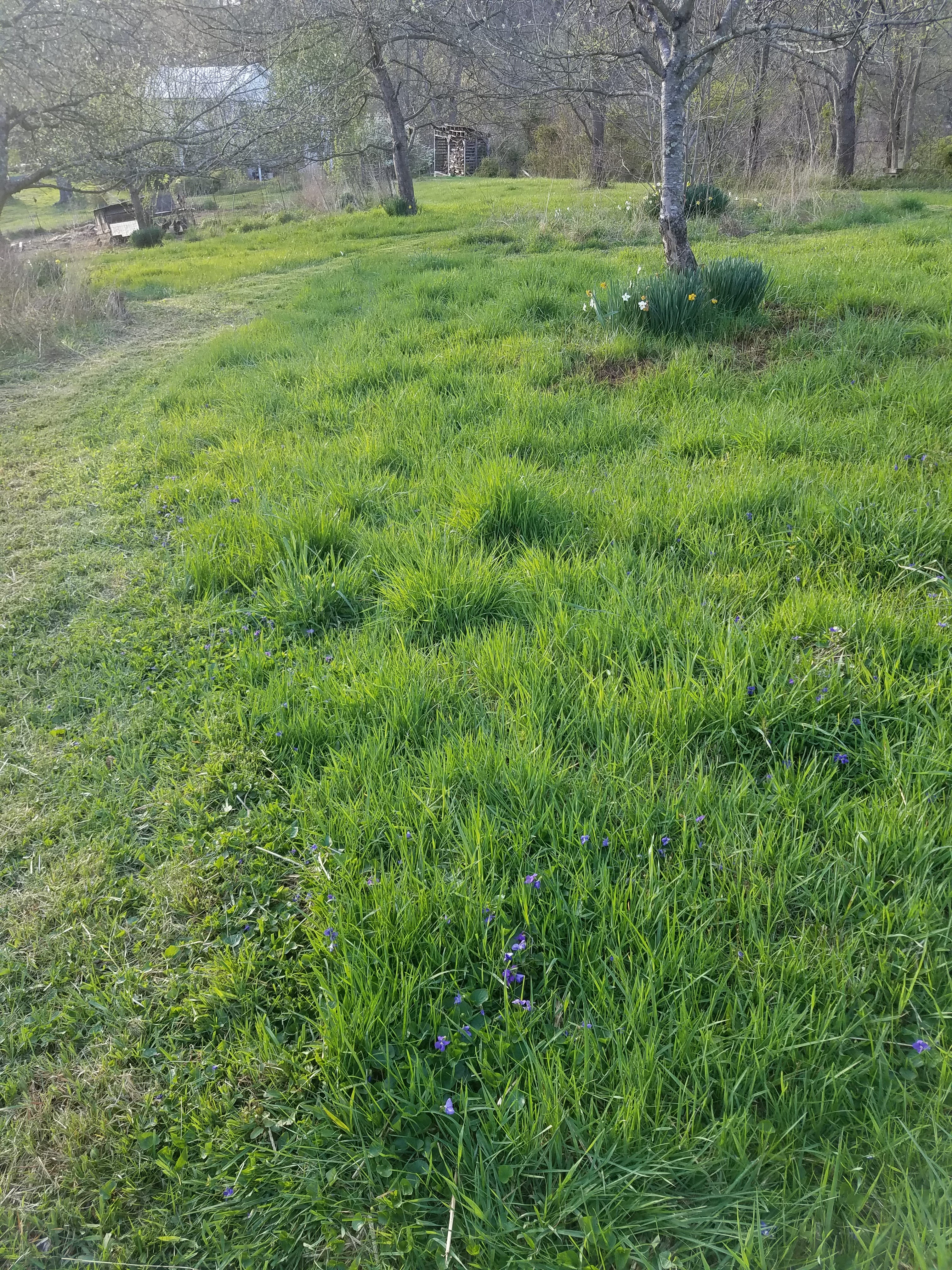
View from the top
I have no control over floods or other people's septic systems, but I have a say about wood in various forms that is delivered to the farm. It is understandable that tree services view wood as waste. Their job is simply to remove unwanted trees, not to utilize the resulting plant matter which is a merely problem to be solved. I have tons of it dropped each year for use in mulching projects in the garden and around the farm.
For the average homeowner, sticks and especially logs are merely waste that, in local parlance, “needs gone now.” Devising ways to make use of this bounty means being able to expand your capacity to import fertility. Wood not suitable for burning or lumber becomes garden bed edging and check dam material, or is left in a pile to provide snake habitat while slowly rotting away. For hugelkultur enthusiasts the benefits are obvious.
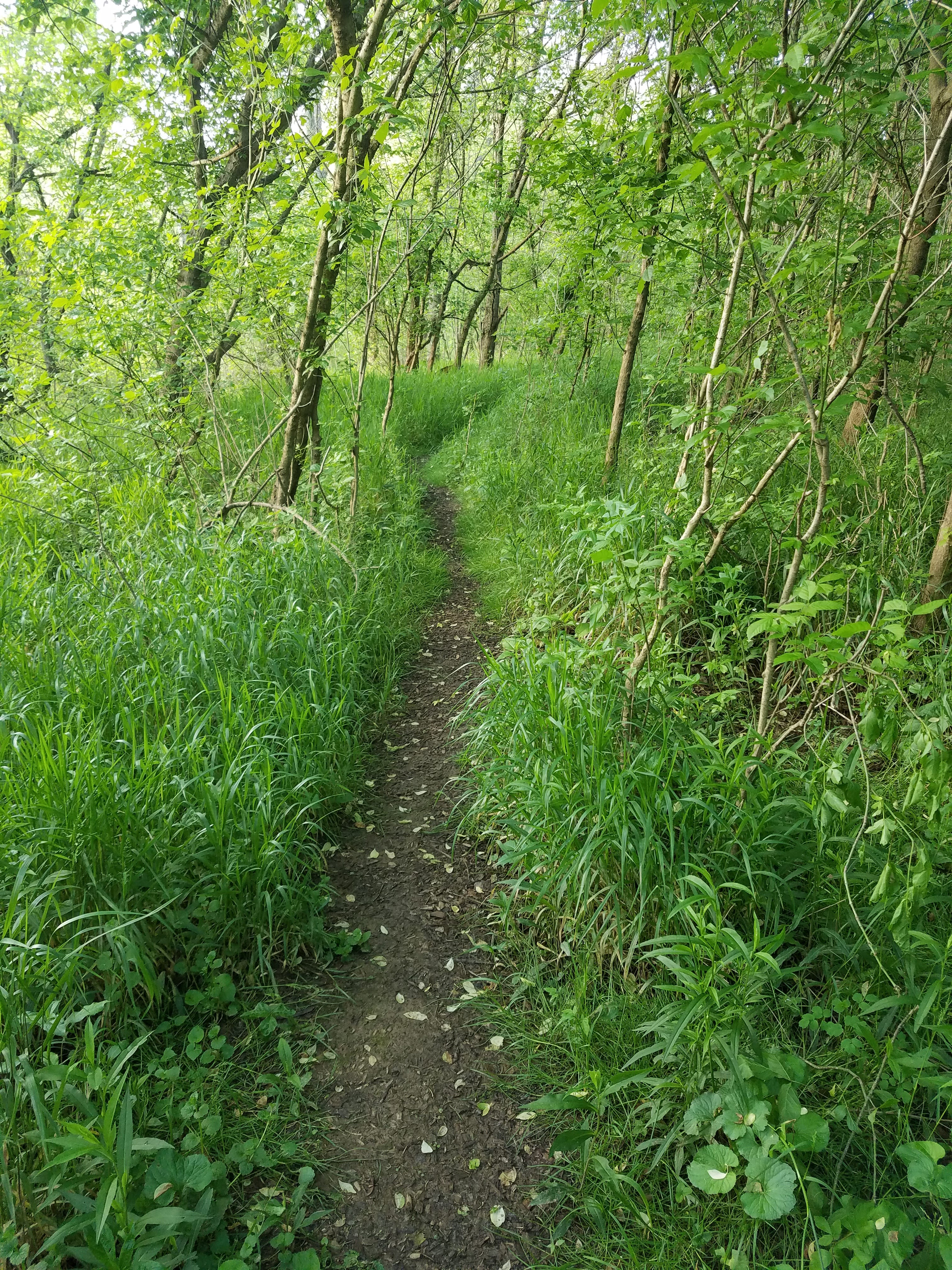
Lush flood zone
Though I'm not including sunlight in the category, it is essential to any discussion of fertility. Not taking maximum advantage of available sunlight means missed opportunity to create fertility in situ. By keeping our outdoor spaces severely mowed and trimmed and sending the cuttings elsewhere, we are subverting the process of photosynthesis whereby all available fertility is put to use to create life. Given a chance, this life might come in the form of veggies to feed humans, leaves that feed caterpillars, or grasses that feed herbivores. Some could be stored in the soil and in woody plant matter to be doled out slowly as needed.
To a great degree we can measure our success as good earth stewards by how well we have integrated ourselves into the fertility cycle. The conventional gardener described above who wastes sunlight and harvests what paltry plant matter that is produced in order to turn it into landfill waste is short changing and short cutting the cycle. Those with small urban and suburban lots don't have room for large trees, but can nonetheless maximize participation in the cycle with vegetable gardens, wildflower meadows, and shrubs and small trees. Grass gets a bad rap, but it's better than asphalt or concrete, especially if chemicals and irrigation are avoided and it is harvested for mulching or composting. By simply letting plants grow we can intercept and hold onto fertility with little effort.
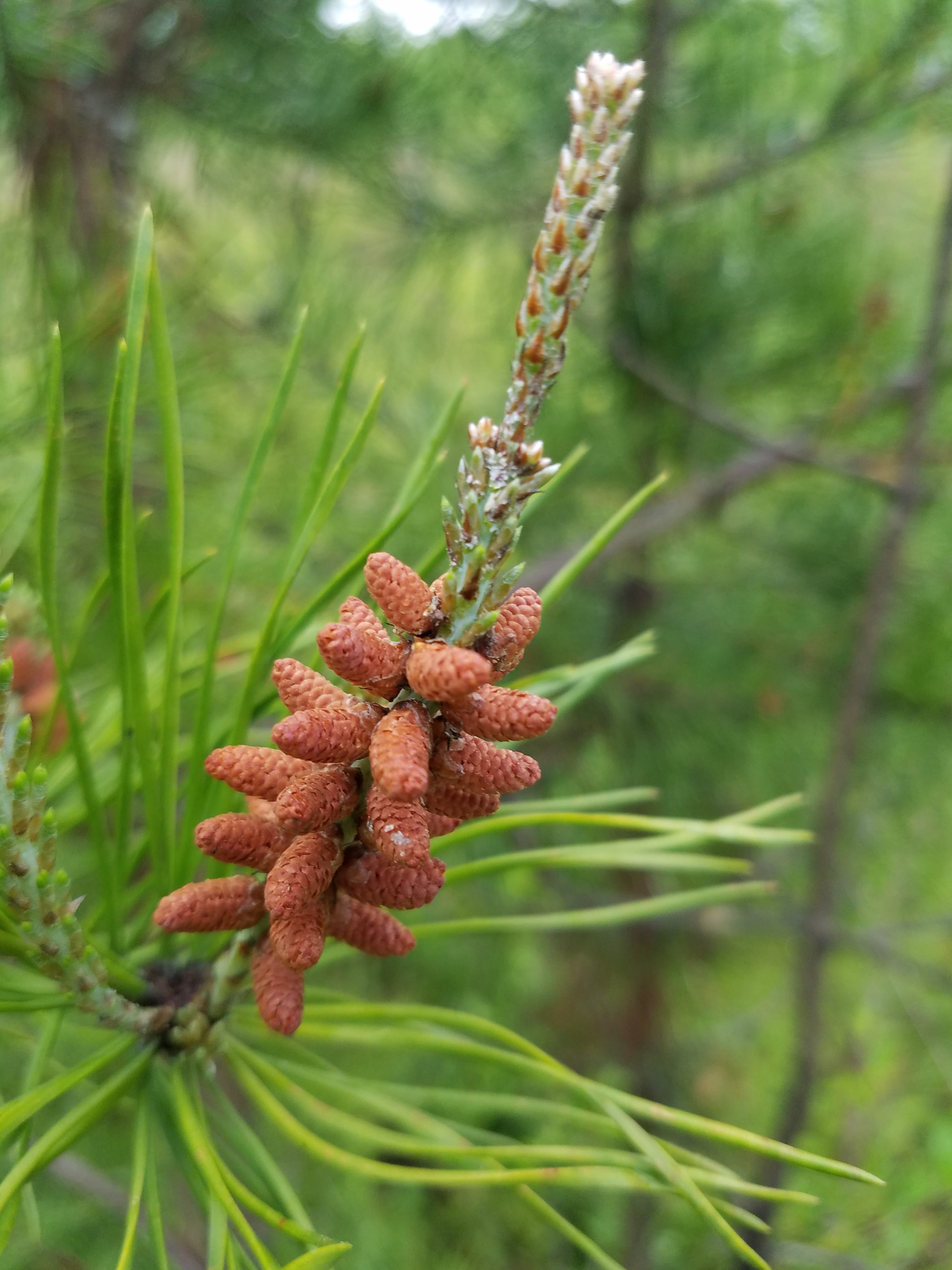
Male pollen cones of Virginia pine
Viewing our activities through the lens of fertility cycling can help lessen the need for purchased inputs, reduce labor, and maximize fertility overall by intercepting it and putting it to use. In my experience very few people think in cycles beyond the very obvious: money enters the system via a paycheck and goes out again as it pays the bills and buys the food. Cash budgeting most people understand because they must. It seems that few people consider carbon cycling (a huge part of the fertility cycle) which is why they are so susceptible to the linear thinking evident in much of climate writing.
Carbon is constantly cycling through all organisms as they live and die. Quantifying the amount of methane released by certain elements, cattle for instance, implies that they are a source, rather than merely a conduit. Your compost pile, your local wastewater treatment plant and landfill, agricultural fields — all can be described as emitting carbon. Wetlands emit large amounts of methane, and using current logic we might conclude that getting rid of wetlands is a good thing, when in reality the draining of wetlands has a detrimental effect on the environment. How different might our understanding be if we spoke of wetlands, ruminants, forests, and other elements of the natural world as cycling carbon, rather than producing it?
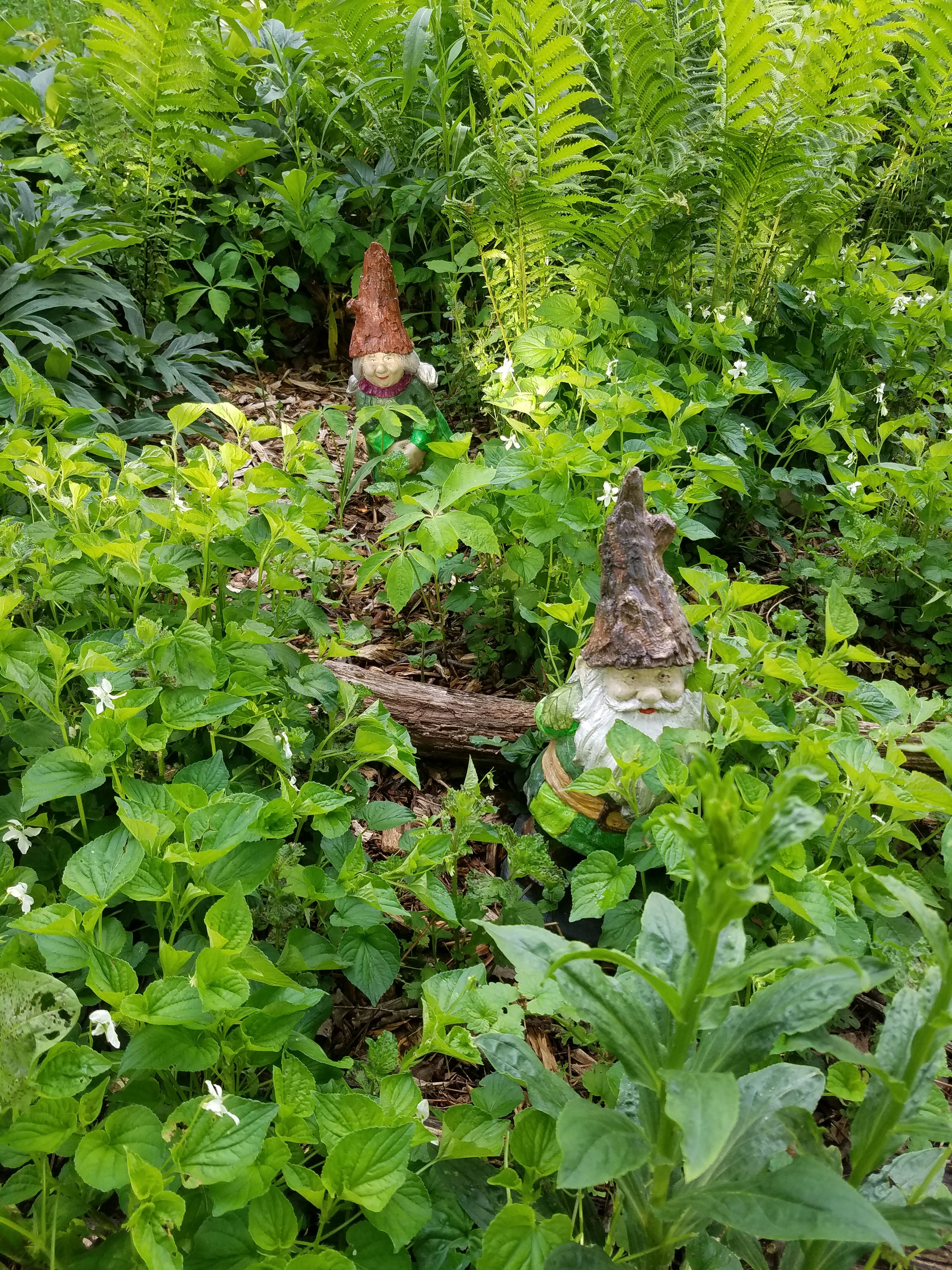
A lush and shady corner
The flood mud has disappeared with spring storms and with the sudden explosion of growth — or perhaps more accurately into the sudden explosion of growth. Nature delivered fertility just as it could be put to use by nutrient hungry plants. In our tiny corner of the world at least, spring has arrived in all her magnificence, the epic cycle of fertility is evident, and it's hard not be optimistic.
Thank you for some sane writing about carbon. Louis Bromfield wrote about closing the loop some 70 years ago in your own state of Ohio. At the time he was considered an eccentric crank. The photo of the doe is lovely.
I enjoyed reading this and being reminded both of the scientific and the mystical properties of nature.