
What I've been up to
A update on winter routines and projects on the farm


I checked the date of my last piece and it was published nearly a month ago. I assure you that I have numerous (numerous!) drafts of partially written articles, but it might be a while before any come to fruition. I don't suffer from writer's block exactly, but lately I tend to erase, cut, paste, and rewrite to the point of silliness. As a partial and temporary remedy I've challenged myself to type out a piece allowing the bare minimum of backspacing, and absolutely no excising of entire paragraphs to be pasted into new drafts with the intention of expanding them into future masterpieces.
I thought subject matter more of a personal nature than usual would be a good way to welcome new subscribers as we dip our feet into the waters of 2026. I've finally broken the 300 sub barrier (for the second time. The first time I slipped back under rather quickly, but this time feels a bit more secure.) I think the problem with gaining subscribers from recommendations, which is the usual source, is that I don't necessarily tackle the same same topics as my recommenders. Those who advise their readers to subscribe to Turtle Paradise do so, I believe, out of an admirable sense of solidarity and a desire to promote original writing in general. If any of you are reading this, please note that I am humbled by your support and immensely grateful.
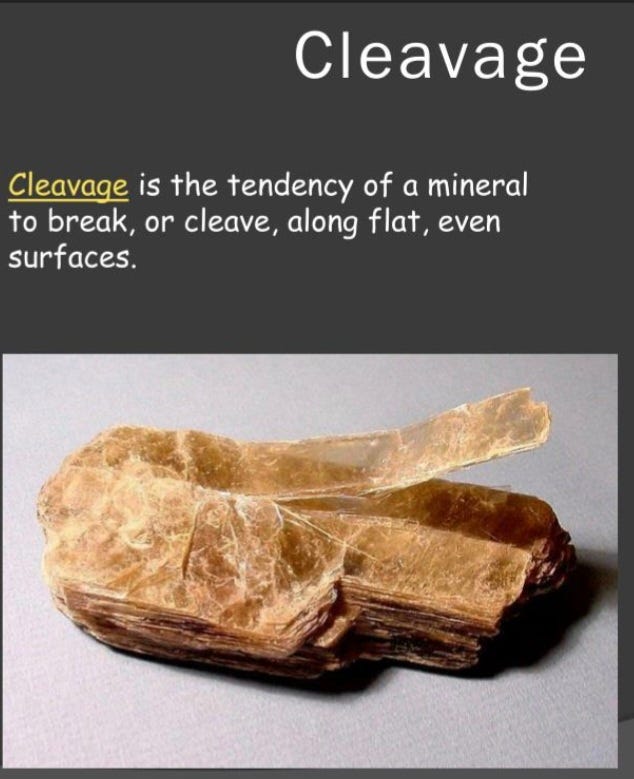
Long story, shortened: A flurry of subscribes is usually followed by an outbreak of unsubscribes, with a very slow uptick of loyal readers. If anyone new is reading this, perhaps I can entice you to stay a while by providing details of my personal life, and the promise of a cleavage photo if you make it to the end of this newsletter.
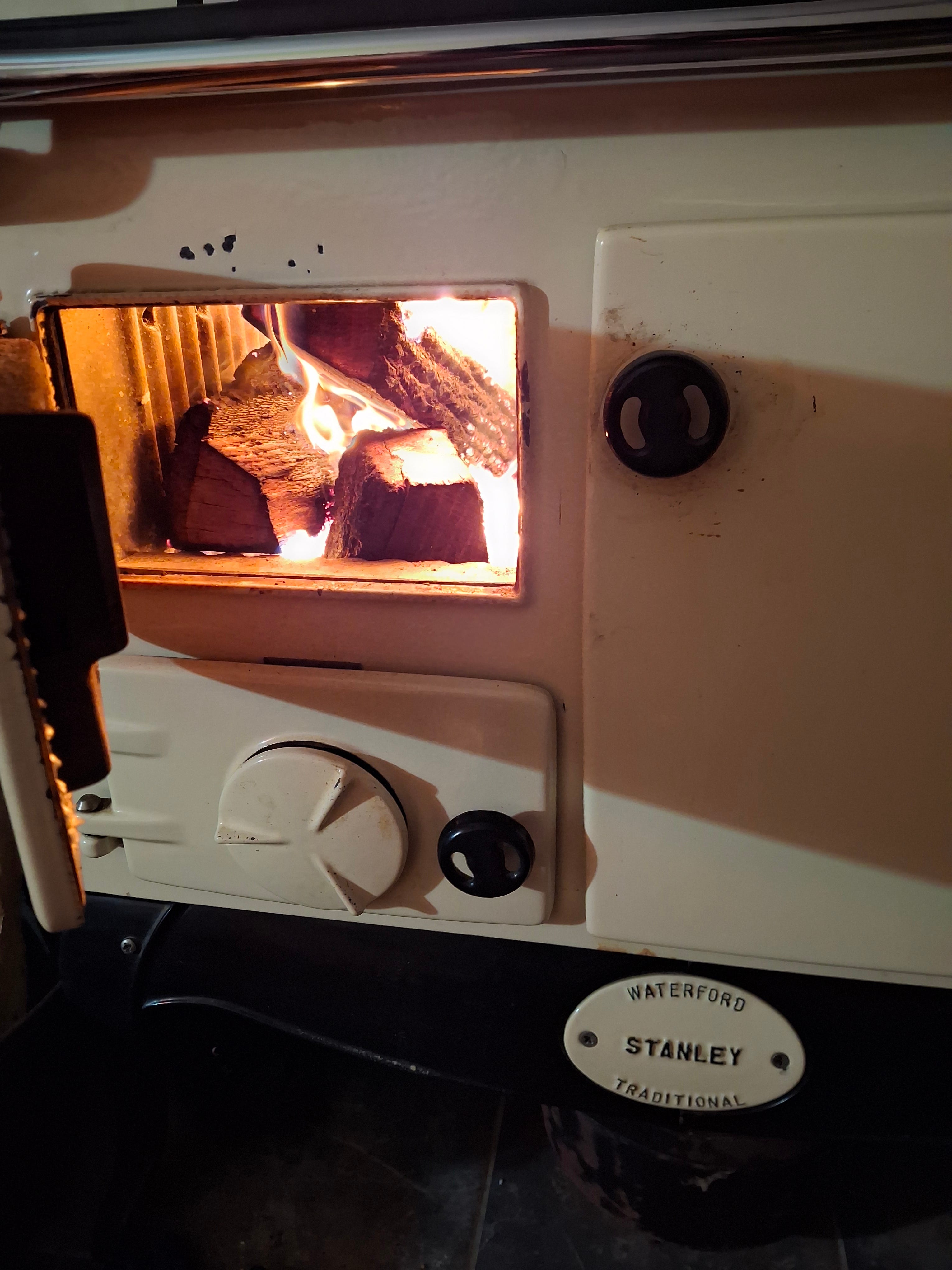
We're deep into January now, and it is 11°F (-12°C) here in southern Ohio. Messing around with the Fahrenheit to Celsius converter, I just learned that if it were 11.42857°F (which it might be) it would be exactly -11.42857 °C. (Now it is no doubt becoming clear to readers why it is so difficult for me to finish a piece of writing.)
To introduce myself to new readers and offer background to longtime ones, I'll offer a description of a typical day for me this time of year. Due to the seasonal nature of my paid work, I'm laid off for much of the winter, so my routine now is quite different from that of other seasons. I get up usually between 3 and 4 AM and stock the woodstove or restart it, as the case may be. I climb into the number of clothing layers appropriate for the weather, leash the dog, and head to the barn, where I feed the horses and refresh their water as necessary. Nights are so long now and I don't like them having to wait until daylight to tank up. A quick return trip through the orchard for Josie to relieve herself and we're back inside where I reverse the dressing process.
Being human, I'm always a little bit resentful each morning that I must go through this routine yet again. Until I actually get outside, that is. As I step foot off the porch, a miraculous change occurs as I realize how lucky I am. No one else is out—no humans anyway—and there is actual quiet, a rare commodity here in our road-filled valley. If the night is calm, I can hear the sounds of unknown critters twittering and rustling in the dark. This morning I was treated to a new sound. At first the creaks and cracks mystified me, arriving randomly from all points north and west in a manner that ruled out footsteps. The -11.42857°C reading on the thermometer clued me in that ice forming on the river that curves around the property must be the explanation.
For a few precious moments I own the night, warm and comfortable and miraculously still wearing my pajamas, which form my base layer. When I finally go back inside, the house now feels deliciously toasty. I remove the stove ashes and feed it again if necessary, the small firebox requiring frequent loading. I then turn my attention to coffee making and drinking, and often writing, while the dark prevents any further outdoor work. Once daylight arrives I suit up again to feed and water everyone, release them to the outdoors, and remove manure as needed. In the late afternoon the chores will be repeated, the intervening time given over to a mix of indoor chores, idle pursuits, and winter projects.
Such projects this year include working on next year’s firewood and horse training. For the former, I had the local tree service take down three trees—a misleading number because each one had three or four main trunks—and a very large limb off another. These trees were threatening to drop walnuts and dead limbs on structures and vehicles and therefore had to go. To save money, I had the crew simply drop the entirety of the material in situ, so I've had the job of hauling brush away and moving chunks of tree closer to the woodshed.

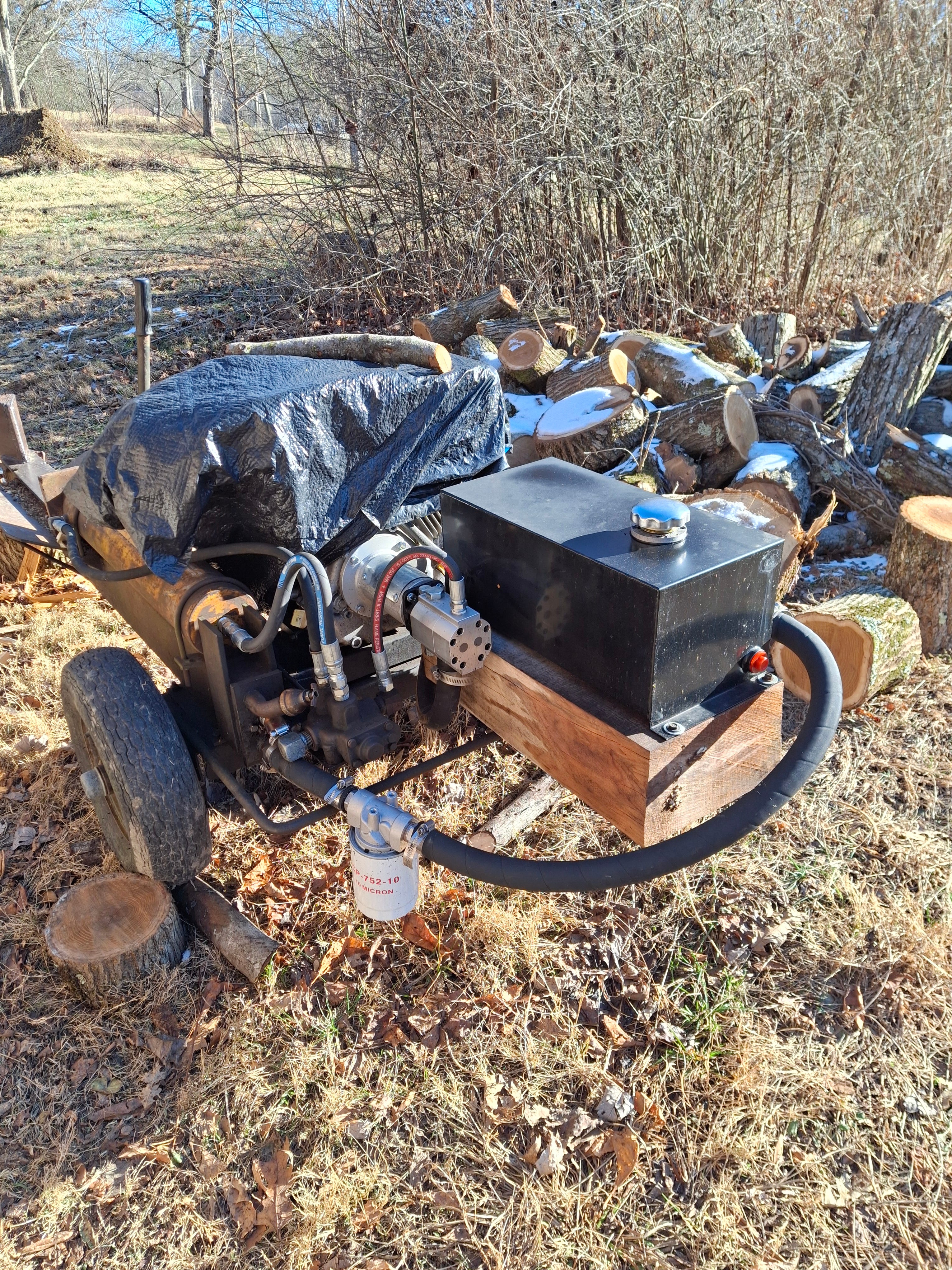
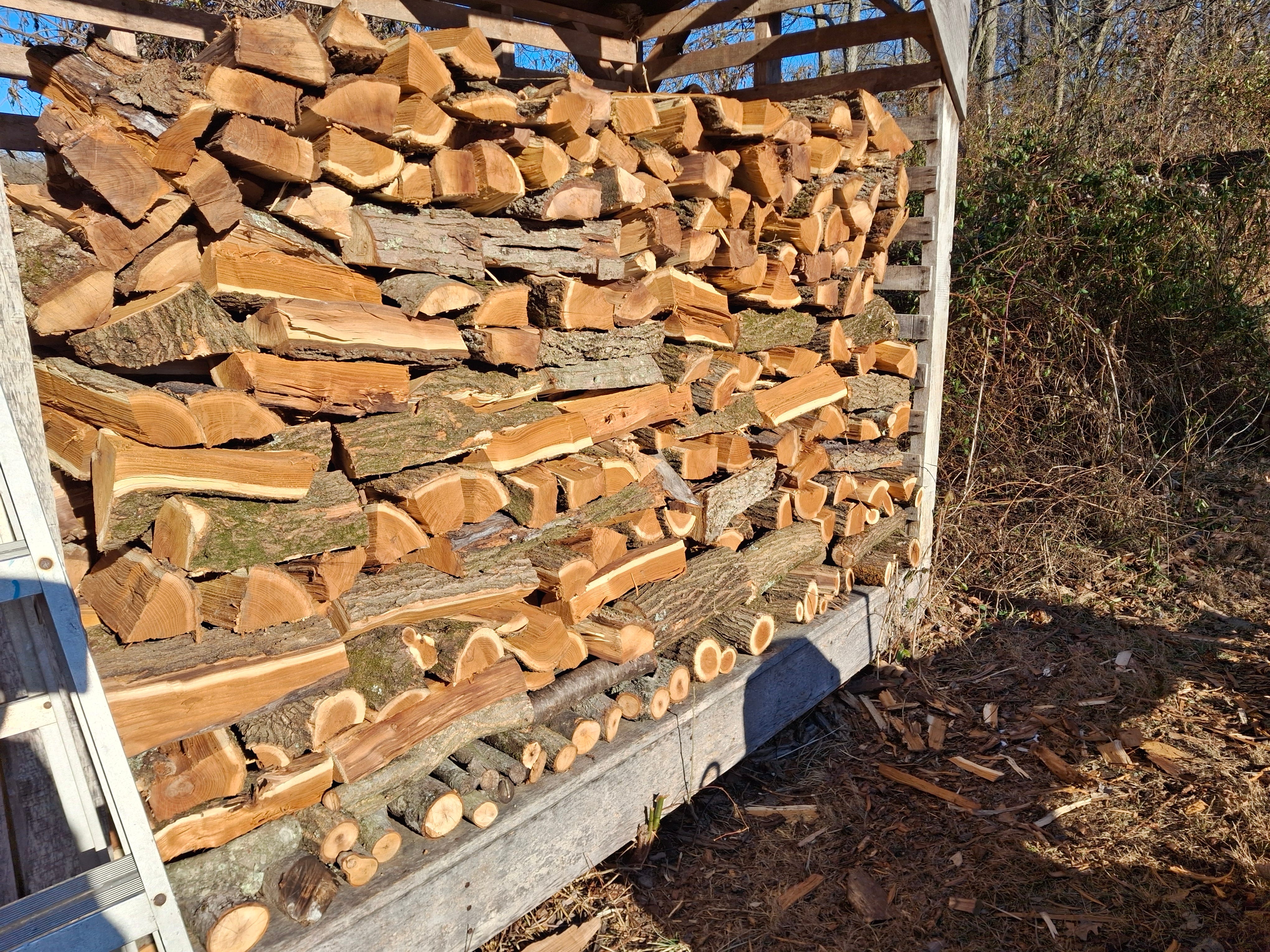
All was going well until the borrowed splitter ceased working. The owner offered possible explanations for its demise, which included digressions on the modifications and improvements he had made, and a description of the act of repair, but no timeline for it. I don't blame him for not wanting to undertake the job in this weather. Wood splitting is indefinitely on hold. Luckily I got quite a bit of it split and stacked before the breakdown, and I'm proud of the results.
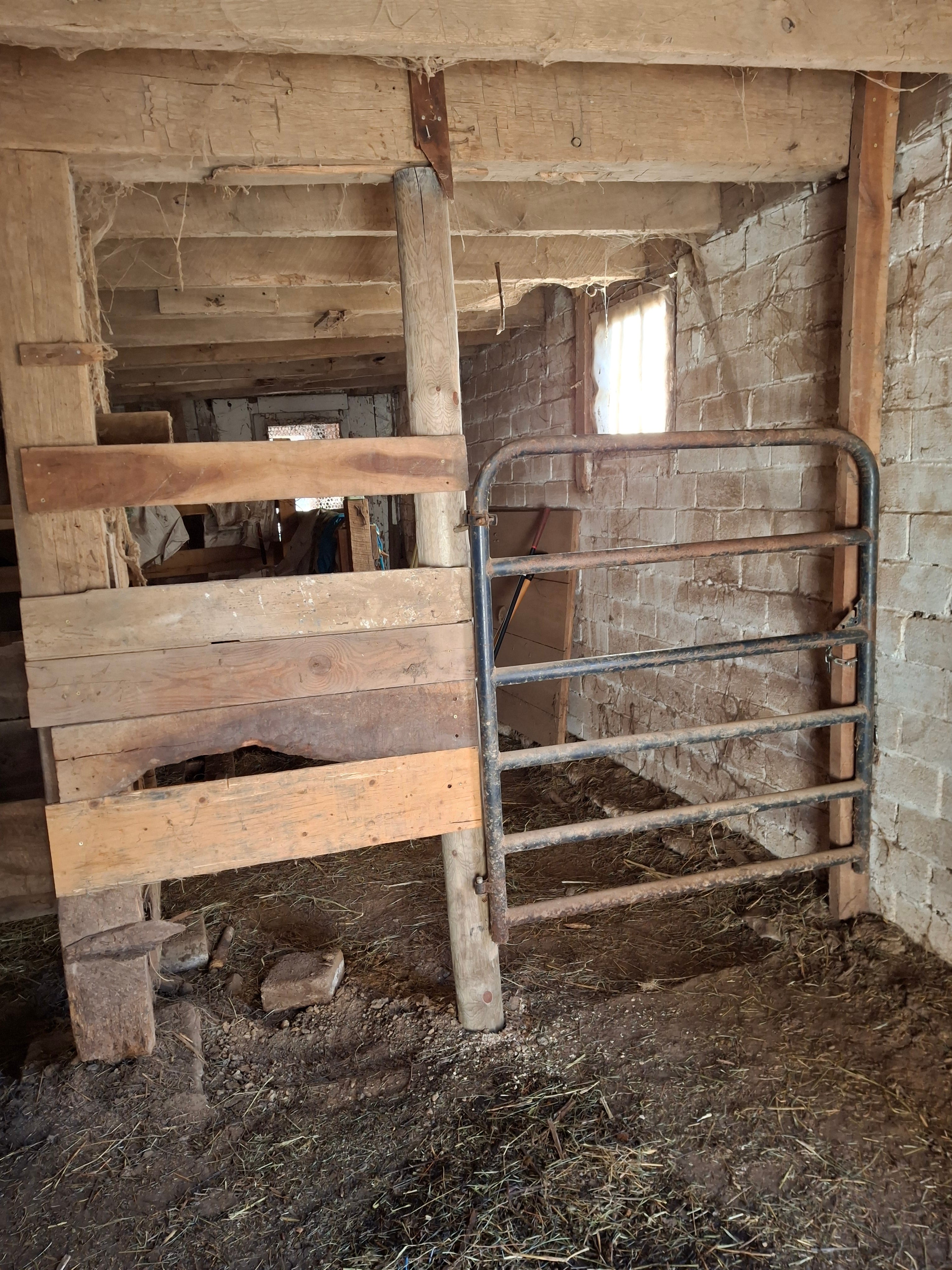
As part of the winter routine, I work with the horses as much as possible, with the goal of having the mare safely rideable outside fenced enclosures sometime this year. Yesterday’s lesson plan took an unexpected turn when the mare stepped on a wooden pallet and got her hoof stuck. Her patience quickly exhausted by the cumbersome appendage now attached to her foot, she panicked and took down a gate and its associated posts, boards, and hardware. Imagine the structure pictured below lying shattered on the floor and you’ll get the idea. A mini-project resulted which I was luckily able to get done before time for the horses to come back inside.
Readers might reasonably ask why such a hazard was left in the way in the first place, and I would answer that it wasn't. It was off to the side of the route we have always traveled safely, and I'm still not sure how the hoof got over there. I blame the malevolent and invisible fairies that hover around horses all over the world, bringing trouble and misfortune to the beasts. These evil creatures cause the poor equines to break down fences, lose halters, cover themselves completely in mud, and let loose copious amounts of urine in their stalls, seconds before turn-out. The horses are completely innocent and as bewildered as their humans as to the cause of such mishaps, as you can tell simply by looking into their eyes after the unfortunate events.
Another small project I tackled recently was removing finished compost to make room for fresh manure in the compost factory. The Camp Chickapoo flock spends the winter in a warm barn lean-to, their summer home being much too drafty. Here their natural tendency to scratch is harnessed to hasten the transition of horse poop to compost. Every so often I need to empty out a portion of the enclosure and wall it off so it can be filled with the fresh stuff, as illustrated below.
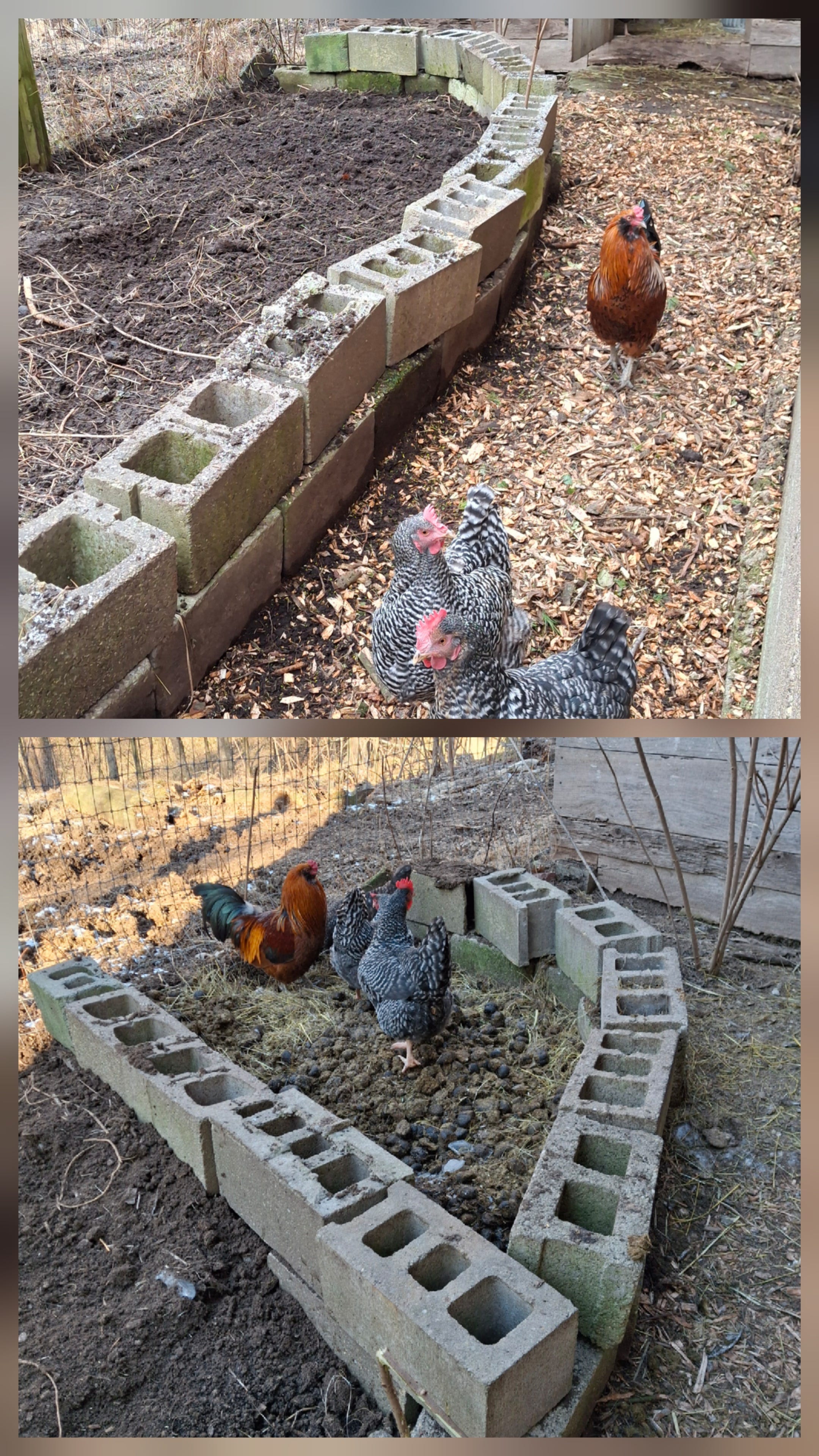
I had put off the task of removing the finished product because, unlike many gardeners, I have an excess of compost and no place to put it. My garden beds are maxed out since I spent the fall digging out and spreading the main compost pile in the potager. This is a good problem to have, and I'm not complaining. If fresh, living compost was valued more, I might be able to give it away, but it is full of weed seeds and possibly the larvae of Asian jumping worms. For other gardeners these drawbacks might be concerning, while for me they are totally inconsequential because the garden is already infected with both. I solved the problem by storing the harvested compost in feed sacks in the barn, confident I will find a use for it in the spring.
When the light begins to fail, I make sure the wood boxes are stocked and spend some time ruminating on all the projects I haven't started and probably won't. Each year is the same: In December, the winter stretches out into the dim distance full of potential. A month later I'm wondering where the time and motivation went. I reassure myself that if I keep up my momentum there is still time for flower bed poison ivy removal, fence repair, and filling mud holes with wood chips. But really I'm wishing for a massive snowstorm that shuts down the region and brings all work to a screeching halt. Chances look good for this weekend with predictions of up to 12 inches. Such a large amount is rare for this area, but fingers are crossed. Enjoy the cleavage!
My heart beat faster looking at you firewood stacking skills. The cleavage shot…not so much. Sorry.
A lyrical and lovely post, thank you. One respectful suggestion if I may, next time you decide to take down a tree, consider cutting it no lower than needed to avoid damaging something when it falls. A snag of even 7 ft can be great habitat for birds.