
Thoughts on going off-grid
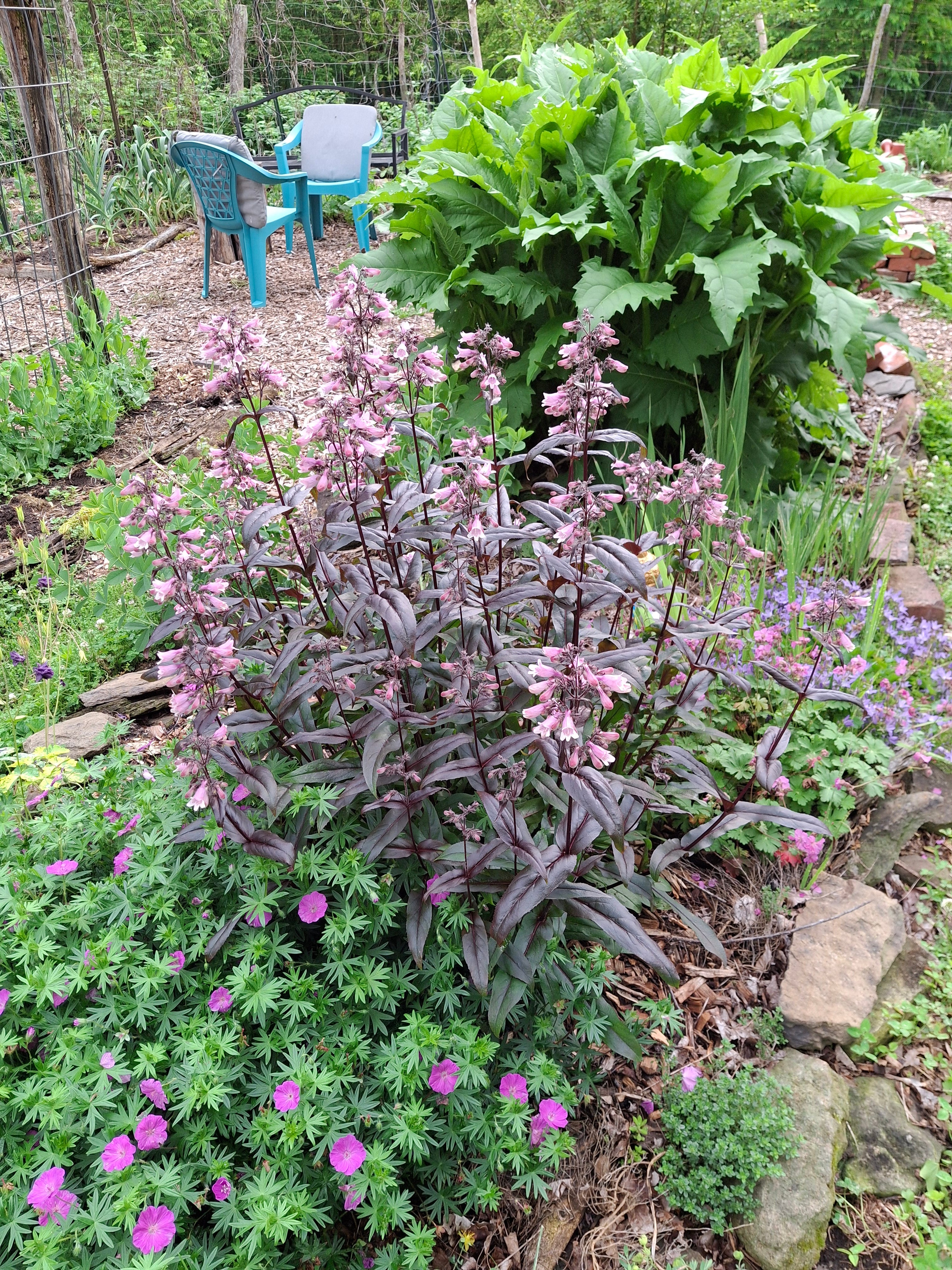
Illustrated with random images from the past year on the farm

When I was in my twenties and between rentals, I lived for a few months with friends in an off-grid cabin. A wood stove provided heat, a propane tank powered the gas fridge and gave us light and hot water. Occasionally the generator was fired up for special jobs like doing laundry, but this wasn't strictly necessary since we could easily drive the three or so miles to the laundromat in town.
With hot meals and showers, and cold beer, we weren’t really living primitively, just a simplier, lower-impact life than that of neighbors who were hooked up to the grid. Nor was the cabin truly remote, though it was surrounded by woods and there was almost complete privacy. Bars, restaurants, and gas stations were a short drive away. This situation fit the definition of “off-grid” however, because back then the term simply meant a home that was not hooked up to the local electric service provider.
Over the years the meaning of off-grid has evolved, and now it has the connotation of a remote enclave insulated from the outside world. It is often used with the assumption of a replacement of grid service with personal solar power rather than eliminating electricity needs or reducing them to the bare minimum. Implicit in the term is the idea of escape—physical escape from urban confines to rural freedom, and relief from the tyranny of the 9 to 5 grind. “Off-grid” evokes a release from dependence on the outside world, and protection from it when the shit hits the fan.
The reality is that escape of this type is impossible for the vast majority of the population. Even the mega-wealthy with the wherewithal to buy their own islands can't truly escape, and it's a different kind of getaway they seek anyway, heavy on privacy but still dependent on the outside world for luxury provisions.
For regular folks seeking the freedom implied in off-grid living, there remains no wild frontier in the United States in which to hide from the world. Perhaps in Alaska there are still places to retreat where no one else cares to go, where at least the feeling of escape could be had. A more realistic goal for most aspirants is a bit of land in a rural area with little zoning and distant neighbors, surrounded by a sufficient buffer to feel safe and private — not complete escape, but an acceptable facsimile.
Even this more humble objective is a pipedream for many due to land costs. Homesteading in the historical sense ended in 1976, and if you want land you will pay for it and be on the hook for property taxes for as long as you own it. Adding necessary buildings and infrastructure piles more expense on top.
Despite the difficulties in achieving the off-grid lifestyle popularized on YouTube and TikTok, the idea of such a life is a powerful force. We can watch videos of attractive young homesteaders doing their thing, maybe learn a little from them, and fantasize about doing it ourselves. Such videos act as potent infomercials for a life that for most of us will never be ours. Like the best advertisements, though, they offer a way to participate in the experience in small bits, by buying the affordable items that support the lifestyle. Automatic door openers and specially designed waterers for the chicken house. Pressure cookers, dehydraters, water purifiers for the kitchen. Solar panels for power. Guns and knives for hunting and protection. Chainsaws, wheelbarrows, and all manner of hand tools to get the job done.
The lists goes on and on, as I found when I searched for “must have homestead items.” Many of the things on the lists are useful and some are imperative for the DIY life, and I'm not faulting the list makers for bad advice nor condemning them for affiliate marketing. It needs to be questioned, however, whether adopting a lifestyle that requires so much stuff really constitutes a simplification of one's life. Implicit in the idea of the off-grid life is something more than physically removing oneself to a private and protected rural spot. The term also holds the notion of exiting the treadmill of unfulfilling work and instead learning to provide for your own basic needs. Somewhere along the line the idea of making do with less, which should be intrinsic to any such project, seems to have been lost.
Will you really need an ATV and a Kubota with 16 attachments? A full set of leather working tools? A generator? Possibly you will, depending on your living arrangements and the work you will be doing. There are a couple questions that need asking first. Will you really have time to accomplish all the work that these tools imply? Can the jobs in question be completed without the expensive equipment? There is a simple way to answer such questions: By easing into the work rather than jumping in whole hog from the get-go, you can determine as you go along what you really need.
I started gardening with simple hand tools, and eliminated the need for a tiller by practicing no-till gardening. Permanent beds are actually less work, and much kinder to the soil. We use tractors here, but they are the smallest size they can be and still get the job done. A quick dabble in butchering demonstrated that it wasn't practical unless done at scale, and supporting local meat farmers made much more sense. This obviated the need for any specialized equipment, fortunately before I purchased it.
Admitting that it's impractical to try to do everything for yourself is helpful in the process of paring down the list of “must-have” items. Outsourcing certain jobs that require specific skills and tools makes total sense. In no village in the world did everyone produce everything: Instead there were bakers, brewers, leather and metal workers, etc. People are much happier when they are able to focus on jobs that align with their skills and interests, and doing so is necessary in order to avoid being overwhelmed. A great side effect of sourcing necessities from your community is that it helps to get to know people and integrate yourself into it.
Is it worth investing in all the smaller gadgets that promise to be labor-saving? It is easy to spend a lot of money on such items, especially when they are hyped by influencers as super useful, and each individual item isn't terribly pricey. Remember that many of these folks are making money by selling you stuff, and often haven't been doing the work for very long. I mentioned automatic chicken door openers because to me they are emblematic of the useful but unnecessary doodads that separate people from their money — and from real work. What better way to sabotage your new life full of meaningful tasks than remove walks to the chicken house? Fortunately you will be going out there anyway to feed, water, and collect eggs and will naturally start to wonder if you could combine trips and get rid of the gadget altogether.
If you decide to keep your door opener, you will learn that such things don't last forever. The higher the technology, and the more moving parts a thing has, the more chances for something to go wrong. When gadgets need repair or replacement, an immediate cost/benefit analysis should result. For me this usually ends with the decision that it wasn't worth it and I won't buy another. The more expensive the item, the more money I spent on my experiment that led me to this conclusion.
Big ticket items — and even most small ones —are not something you want to experiment with to find out if they are truly necessary. It should be done the other way round — try to get along without it first and see how that goes. Counterintuitive as it may seems to many, the more you spend on sophisticated items with high embedded energy, the more dependent you will be on the civilized world. This can be explained in one word: parts. When you make a run for your newly acquired land encumbered with a hefty payload of materiel for your battle against the wild, be aware that the need for replacement parts will lurking, waiting for a chance to bite you in the ass. Equally essential are the tools for dismantling and reassembling the broken item. The more complicated your equipment, the more tools you’ll need to have on hand. I believe in fixing broken things oneself, but I believe more deeply in eliminating items that need a lot of fixing in the first place.
An example of technology that never needs fixing: cast iron cookware. This is my kind of technology. It’s sophisticated enough that I can't manufacture it for myself, but once I've acquired it I never have to worry about repair or replacement. No moving parts and you don't even have to wash it. What could be better?
The tech I like to rag on the most is solar power. People who dream of retreating to a off-grid sanctuary powered by solar live partially in a world of fantasy. These folks might be temporarily better off than their neighbors if the grid goes down, but are ultimately dependent on a complicated concatenation of elements that runs from the panels themselves through controllers, inverters, and batteries, to the item that is being powered. It’s a stretch to claim that this represents a simplification if it merely replicates an electricity powered lifestyle without the grid hook-up. If you're in a position to take for granted the uninterrupted capability to power electrical tools and appliances, you will do so, making it all the more difficult for you if your system fails. The system is only as good as its weakest link, and will need upkeep and spare parts at some point. You might have the best and most reliable system on the market to light your home, but an ice storm at the production end, or a lack of lightbulbs at the point of use, will cripple it.
It might sound like I'm anti-solar power, but that's not strictly accurate. It some cases it might be the best way to go. For those of us for whom cost prohibits such a route, there are other options. One is old-style off-grid living, where you avoid reliance on electricity altogether. In the 90’s, my friends and I were still able to enjoy most modern conveniences courtesy of the propane tank. Though we were still dependent on regular propane deliveries, this was a much cheaper and lower tech option than solar.
The least hyped option — and the one available to the most people— is to stay hooked to the grid, but reduce your dependency on it. This might sound backwards, especially after my claim that having a constant power supply will make you take it for granted. It is possible to consciously tackle this conundrum, however, and work to establish back up systems. In an extended outage, my home will still have heat and the ability to cook food by using natural gas, and if the gas goes out we have the additional backup of wood. We will have a clean water supply until the tower runs dry and the water company can't pump it full. In a continuing emergency we can resort to boiling rainwater from various collection tanks and barrels. All this might not be ideal, but it's doable, since monthly charges for utilities are miniscule compared to the cost of installing solar or drilling a well.
There needs to be more emphasis on the “simplify your life right now” part of the homesteading dream, as opposed to the “build a zombie-proof fortress as soon as I save enough money” portion. Apartment dwellers won't be keeping livestock (probably) but there is no reason they can’t cook from scratch with food in season and bake with sourdough starter. Learning skills like mending and sewing, producing home remedies, and basic first aid don’t need to be carried out in rural retreat. If fact, it would be better to simply separate altogether the basic, DIY skills aspect from the need to own rural land, especially from the fascination with “raw” land.
“Raw land” in real estate jargon has no infrastructure, not even roads, and those who speak of searching for raw land to purchase most likely mean unimproved land, which is accessible by car, but not built upon yet. Regardless, it needs to be acknowledged that a common version of the current back-to-the-land dream (in the Eastern US at least) necessitates expanding into areas that are most likely second or third growth forest with functioning ecosystems and little development. In other words, exactly the spaces that should be spared from encroachment, perhaps not wilderness, but the best of what is left after centuries of extraction.
Beyond the acquisition of the astonishing amount of stuff that is encouraged by the off-grid fantasy, it is this that bothers me the most: the unexamined belief in these green spaces as some sort of frontier, and expansion into them as something other than sprawl. What if everyone could afford their ideal, remote paradise? The unfettered dream of self-sufficient fiefdoms would mean land outside of preserved areas would be snapped up and eager homesteaders would be begin cutting, clearing, and building structures.
The idea of carving out a place and a livelihood in the wilderness for one's family, a 19th century leftover, has to go. This statement might sound like hypocrisy coming from someone who already has their piece of heaven, and who is complaining that it would be ruinous to let everyone else gets theirs. In my defense, my location is not remote, and consists of former farmland that butts up against industrial and dense residential areas. Let me propose an alternative dream of escape: Multiple families or groups of single people form co-ops to purchase existing housing and land in areas abandoned by industry or farming interests. An emphasis is placed on human labor rather than expensive mechanical slaves dependent on parts and repairs. Older structures are rehabilitated. Land is evaluated for best uses while owners are inhabiting it and getting to know it.
The homestead vision as often portrayed is one of buying land and a lot of stuff and retreating from society. I think most folks are more realistic and dream of simply getting out of crowded cities and suburbs, but still have unreasonable goals of how much they can accomplish, leading to the purchase of lots of stuff they might never use. People tend to love gadgets and gewgaws, and since an overwhelming portion of human endeavor goes into persuading the public to purchase such things, this trend is unlikely to change.
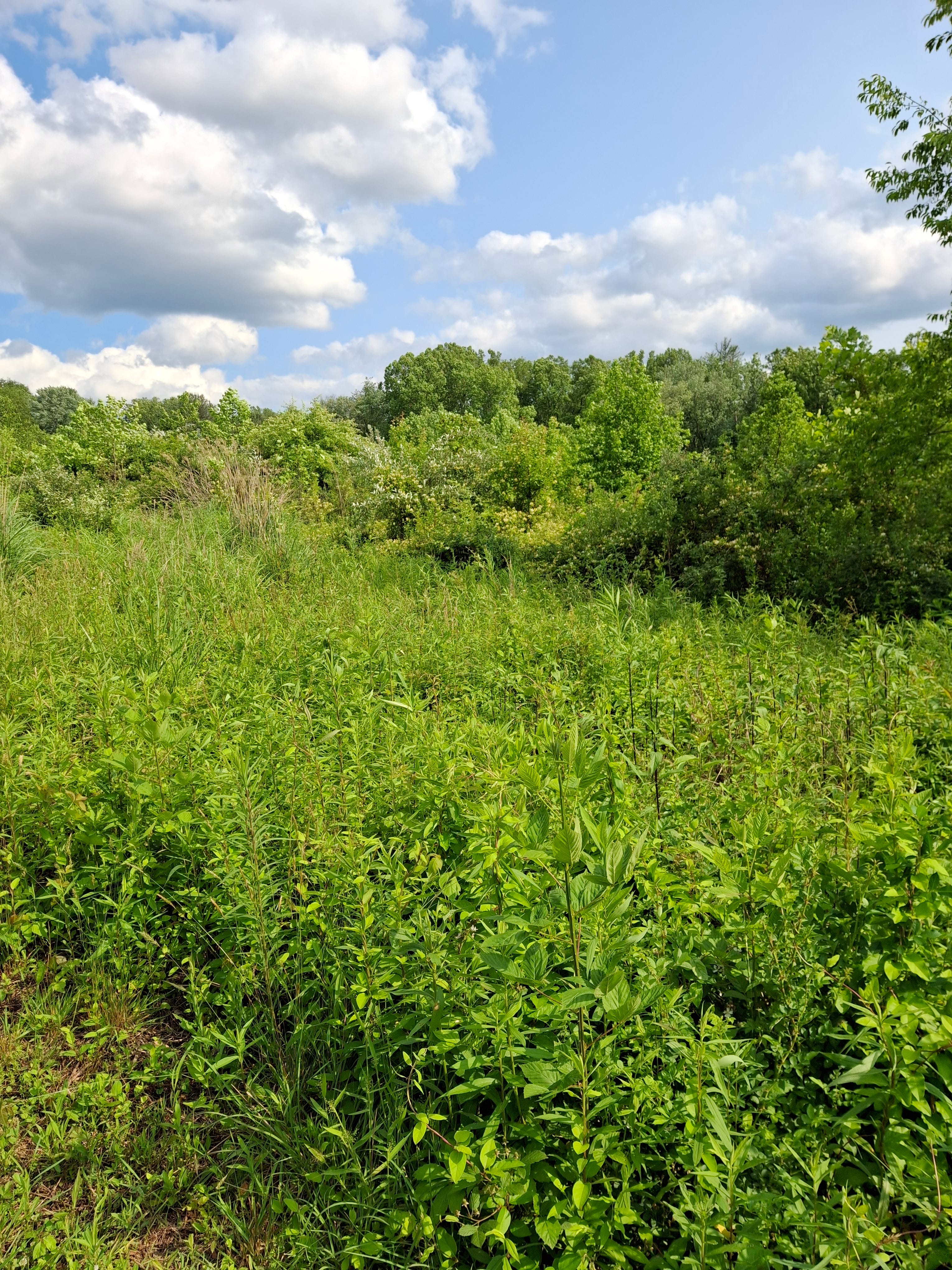
On the other hand, there is undeniably a strong element of DIY folks who are intent on reskilling and exploring self-sufficiency in a more simple and earth-friendly manner. Many of them write here on Substack. These are the voices that need to be brought to the forefront of any meaningful homesteading movement. Feel free to link to your favorites in the comments. I hope everyone enjoyed the pictures. It won't be long before this:
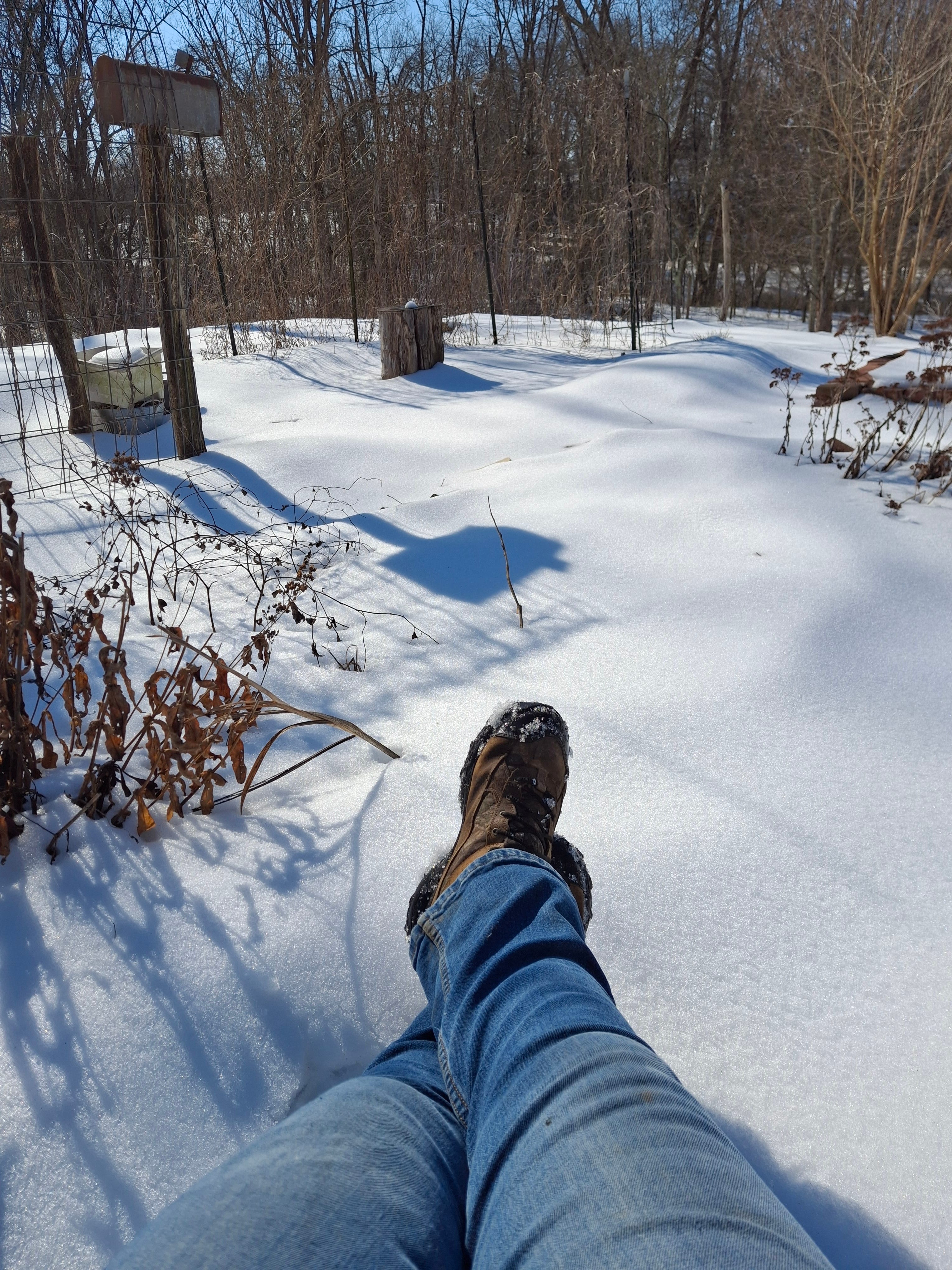
Turns into this:
Hi , I am new on Substack and I am looking for the gardeners!
You are the first I found.
I have lots to say about homesteading too and I am working on a reference book project for intentional communities, homestead settlements and eco villages.
I will write about it soon.
Can you maybe link me some contributors where I can connect some more?
Happy to be here!
Excellent, thought-provoking topic. We're such odd ducks to most of our friends and family, I couldn't help but read this with them in mind. Most of them look at us and consider us off the grid, self sufficient AND self reliant, and also crazy. Almost none of those considerations are true. (Only the 'crazy' one).
I think we can have some good conversation on this some quiet Saturday morning at the farm market.